KTM 125 Duke – One Year On.

Despite saying I would never do it again, I have found myself in a serious relationship. We have all been there, right? Multiple times. The first time you are fuelled by lust, with little real understanding of what it is you are seeking. In my case, this happened in 1995. She was a Benetton CBR600. Once the initial flush of lust was over, I began to question whether she was right for me. We broke up.

I was single for a good ten years. Happy, too. Eventually I began to feel like something was missing in my life. I bumped into another CBR600 at a random get-together. She reminded me of my former love, although this newcomer’s traditional blade tiger stripes were eminently more seductive. Being the shallow and undeveloped rider that I was, I succumbed. The relationship was short and fiery.

I left her for a ZX9R. I tried keeping both of them happy for a while, but that soon came to an end. The Ninja and I had a passionate three years before she wore me out with her constant tank slaps. She was exciting, but ultimately, it felt like she was hurting both of us. Another ten years celibate, and I honestly intended to live the life of a monk.

Enter Daisy Duke.

She and I began our relationship exactly a year ago. A lot of my friends said it would never last. Accusations of Daisy being unreliable were the main objection. Others felt she wouldn’t be enough for me. Well, she and I just spent a month travelling nearly 3000 miles, and she has proven everyone wrong.

So what is she really like?

Far be it from me to overextend a metaphor.

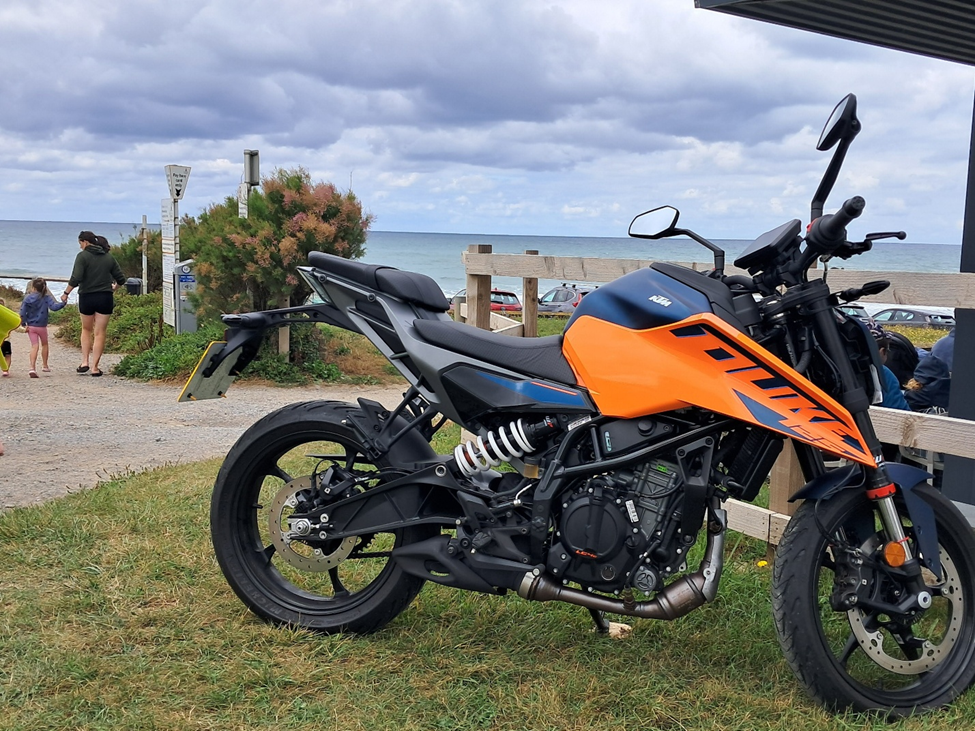
Let’s cut to the facts. Daisy is a KTM 125cc Duke. I have ridden her a total of 5325 miles since I picked her up (brand new) from John Deacon Racing in Saltash, in June 2025. I had looked at other 125cc bikes.

Why a 125cc? You can find out more about the reasons behind my choosing a 125cc here.

The KTM stood out for two main reasons.

Firstly, the125cc is in fact the 390cc bike with a smaller head, and no adjustable forks. In other words, she is over-engineered and designed to handle well. All of the other 125cc bikes are simply small bikes, trying to look like their bigger sisters.

Secondly, the aggressive styling and “Duke” DNA appealed to the impressionable part of my brain. I fancied her, pure and simple.

To put you in the picture, my mate Ben and I thrashed two of these bikes from Land’s End, all the way to John O’Groats, and back.

I can safely report that reliability is not an issue. The rumours were unfounded. Aside from a random Immobiliser warning light during one particularly savage downpour, and a rogue warning triangle that occasionally appears in the wet, the bike has never missed a beat. I suspect cheap sensors are the culprit. KTM are not alone in this department. I have seen the same thing happen on £100K Mercedes cars.

KTM 125cc Duke – Long Term Performance

There are many reasons why I am glad I did our trip on the KTM. Over a 2750 mile/three week adventure, I can share the following facts:

  • Average daily fuel consumption: 112 MPG (The entire trip cost £200 in fuel).
  • Top indicated speed: 76 MPH (Both bikes for about eight minutes on the A380)
  • Average clear road speed: 62 MPH

Naturally, on such a big journey, we made sure to show some mechanical sympathy. Both bikes had an oil change and warranty service halfway round. (My bike was showing 4120 miles at the point of the service).

The thing is, performance is not the aim. Enjoying the ride is what motorcycling is all about.

125 Duke On The Road Presence

Most people we met on our journey could not believe we were riding 125cc bikes. And in some ways, we weren’t. They are 390cc bikes with a smaller engine. What that means in real terms is that people see you. I don’t mean in an ego sense. I mean, the KTM’s on-road presence is more striking, and therefore, cars are more likely to see you.

The KTM 125 doesn’t just look big. She rides big, too. The handling is insanely good. We rode some of the most exciting roads in the UK. Grin factor 11 was standard. Throttle pinned, and in all weather, neither bike lost its footing. Legal speeds never felt so exhilarating.

Bike/Rider connection

It takes a while to get to know any new bike, whatever the size. My biggest takeaway from the last year of riding is that the KTM 125 Duke enhances your rider skills. It is easy to outgrow some small motorcycles. The KTM has bags of character. While speed and acceleration are extremely limited, what it is capable of is delivered with flair.

Of all the bikes I have owned, the KTM has taught me the most. Why? Because you can actually get close to its limit. Most bikes are way too much for the road. Riding big bikes too soon can easily hamper your development as a rider.

As 125cc bikes go, the KTM is a superb all-rounder. The truth is, I don’t want to get rid of her. Of course, I am going to want a bigger bike, but Daisy is staying.

If you are looking for a 125cc to learn on, commute, or just for some unashamed fun, I can highly recommend the Duke.
KTM 1390 SUPER ADVENTURE S EVO – review by Sean Holland

Comfort Zone

KTM 1390 SUPER ADVENTURE S EVO – review by Sean Holland

When Gareth at JD Racing suggested that I take out the all-new addition to KTM’s somewhat legendary Adventure range, my ego bristled. An adventure bike is not really me. I mean that in general terms. The Multistrada, BMW GS, and Honda Africa Twin; they all leave me a little cold. The reason being that I don’t tour. That said, at the time of writing, I am just three weeks away from riding 3500 miles on a KTM 125 Duke. So, in fact, riding a proper touring bike to see how we should be touring actually makes for great journalism. Gareth shows me over the bike, hands me the keys before leaving me to acclimatise. 

Seeing with new eyes

Astride the beast, I take a moment to consider my prejudices. To write off an entire style of motorcycle based on the fact that “I don’t ride like that” is admittedly a little narrow-minded. I don’t ride motocross, either, but I find Motorcross bikes appealing. But dirt bikes are fast, noisy and, for want of a better word, sexy. Wow, am I really that shallow? It does appear so.

Perhaps it is the automatic gearbox that is putting me off, I muse. Yet, I have ridden twist and go mopeds all over Southeast Asia, so why wouldn’t I enjoy riding a twist and go monster like the 1390?

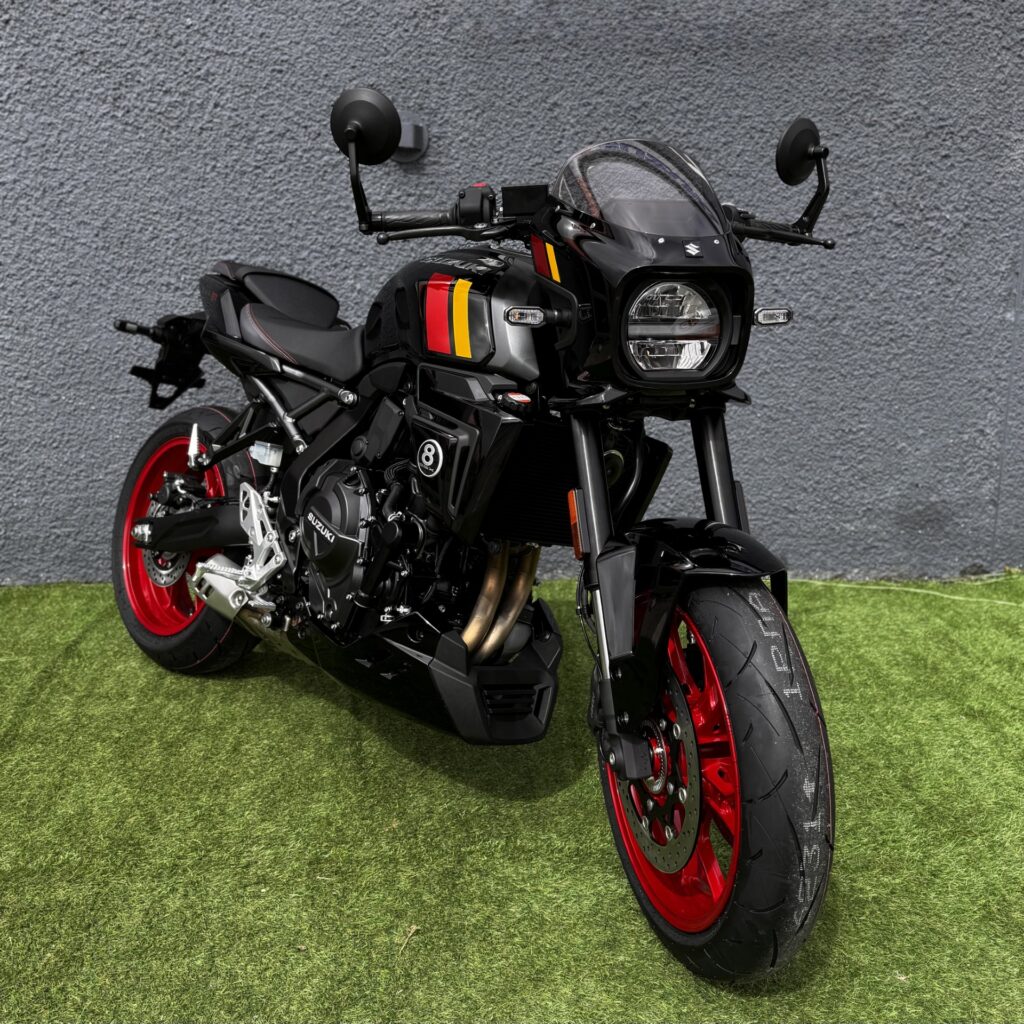
I decide that, to get the best out of the day, I willforgo the deep dive into the vast array of features and just ride. I am a biker. Any bike should logically do one of two things. Impress me, or leave me cold. My ride-partner in crime, Ben, is reviewing the Suzuki GSX 8TT, so we plan a mixed route of A roads, B roads, Urban, and a section of Dual Carriageway. With my newfound optimism, I select Auto, hold the front brake, and hit the start button. She growls at me aggressively, daring me to put her to the test. 

First Impressions

I am 5ft 8 inches with a modest inside leg measurement. My initial concerns about riding a large adventure bike are immediately put to rest. The 1390 is almost perfectly balanced. (In fact, as the day progresses, I find her easy to manoeuvre. With little more than tiptoes I am afforded, I find I am able to shuffle her around, even backwards, up a slight incline, with absolute confidence. Off the bike, she is easy to move around, too. Personal fear number one alleviated.) 

With the automatic gearbox finding first with a satisfying thunk, I release the front brake and twisted the throttle. I am rewarded with a smooth, controllable, and yet eager take off. One of my other prejudices was based on having ridden large Ducatis and KTM’s. I have ridden the Monster 900 for over 8000 miles as a rep for McAMS, and weekend tested the various sports models when I worked for a local Ducati Dealership. I have also ridden the big KTM’s, including the big Duke and the RC8. One thing I can say about all of them is that the clutch work around town, and in slow-moving traffic, is an absolute pain in the rear. Those bikes want to be ridden. Not so the 1390. She is as easy to ride around town, and in slow-moving traffic, as my 125 Duke. Another prejudice put to rest.

Once through the industrial estate and out onto the A38 between Saltash and the roundabout at Trerulefoot, my grin is easy to find. The 1390 engine feels refined, super responsive, and eager to go. The 50MPH limit on the single carriageway for those first few miles is easy to honour, but the touring pedigree makes itself felt. The 1390 is planted through the corners and entirely comfortable on fresh tarmac. She also soaks up the sections of the road that are more like the pitted and potholed rural roads of Bali than a supposed first-world country. The transport minister of our country may well have to hang their head in shame, but on the 1390, I am not paying the price for their failures.

Fifty Miles In…

I am thoroughly enjoying the ride. We have navigated petrol station forecourts, slow sections, and eaten a dual carriageway for breakfast. The A roads and B roads that link Liskeard to Launceston, Callington, Tavistock and back to Plymouth maintain the grin factor. The twisties prove that the big KTM is as nimble on her feet in corners as she is in car parks. I mean, no one is getting their knee down, but that is not what any prospective owner is thinking about.


As we blast along the A38 from Plymouth to South Brent, I realise that the 3500-mile journey that I am about to undertake should absolutely be done on the KTM 1390. It won’t be, because that is not the “challenge”. If I were taking up touring, though, the Super S Adventure EVO, with the automatic gearbox, would be very high on my list, if not top.


On reflection, my only gripe about the “manual” mode is that the foot gear shift is a little high. I am sure that is a setting that could be personalised. For the most part, I am happy leaving the gear changes to the bike. In the twisties, I use the trip-tronic paddles and selected manually. Having the bike change gear while you are banked over is a little disconcerting.

Final thoughts

KTM has done a mighty fine job with the 1390 SUPER ADVENTURE S EVO. To be able to turn the mind of a notoriously cynical, often opinionated, me in the space of four or five miles is a job well done. There are things I don’t like; the iPad-type screen, for one. I like dials. iPads are for the sofa, not cars and bikes, but that is just me being an old man. This beast wants to be ridden, but will deliver a totally usable experience when conditions are not favourable, be that rush hour or crap roads. When the road ahead opens out, and the horizon beckons, she will get you there before sunset, with a smile on your face. That is what she lives for.

If you are looking for a BMX GS or an African Twin, I highly recommend you ride the KTM, too. If you are new to touring or planning your own Long Way Round, then do yourself a favour and book a test ride. 

Suzuki GSX 8TT Review

Suzuki GSX 8TT Review by Lance Goodman

An easy, quick and genuinely enjoyable real-world road bike.

Motorcycle reviews are subjective, we all know that. What makes me part with hard cash may make you question my judgment. So, to help you decide whether this Suzuki is worth a punt, I need to provide a little context. I would guess that if you are even considering such a neo-retro middleweight twin, you are not a Harley traditionalist nor are you a Panigale fantasist.

I’m 5ft 4in, 13 stone, and 67 years old who owns an F750 GS, an Indian Scout, a 26-year-old Bonneville, KTM 125 Duke and a Triumph Street 400. I’ve never owned a sports bike. My only experience is riding a Kawasaki Ninja to Oxford from Cornwall quite some time ago. I am a Suzuki newbie. It is not the case that I’ve actively shunned the marque, it is because Suzuki styling has never really moved me.

And that was my first thought when Gareth at JD Racing handed me the keys. It’s a good looking bike in a modern way and will appeal to those without my prejudice for classic retro styling. The noise at start up was very satisfying if not bone tingling. The seat height at 810mm is low enough for me to lessen the worry of dropping it, should I park carelessly on an adverse camber.

It felt instantly comfortable as I took off through the industrial estate. Immediately, I could think of enjoying the ride rather than concentrating on keeping the thing upright as I rode through traffic and roundabouts towards the open road. The throttle response and gear changes were incredibly smooth, its ‘bi-directional quick shifter with auto blipper’ is a dream, making gear changing quick and easy.

The route to test the bike was a real mixture around the Devon and Cornwall Tamar Valley, taking in the urban environment of Plymouth, the dual carriageway of the A38 and quiet twisty country roads. In every environment the bike performed beautifully. The ride was never hard work, with the bike being equally at home in the variable 20-30 mph zones as well as the national ‘speed limit’ test areas. Crawling through town tests any bike as the need for braking and gear changes could become tedious, but not on this bike. Smooth as warm chocolate.

Out in the countryside, when the traffic hides elsewhere, the engine delivers power evenly and quickly. There is even a bit of engine braking so that approaching a corner became predictable and smooth leaving me roll off, glide through and power out. I found I could concentrate on the ride rather than worrying about clunky inputs. Mind, if you are worried about gaining points on your licence, this bike will test your restraint as it very easily powers you forward. I would very happily buzz around all day in the Devonshire twisties.

As for long distances, well, its a naked retro. The engine and seating position would allow you to do it, and depending on your age, body size, attitude and capacity for wind buffeting, the GSX will get you anywhere you want to go. I found that at about 75 mph a larger screen would help, but that would look out of place on this bike. The GSX of course has the acceleration to get past lanes of slow traffic with minimal fuss. I’m planning a trip to Spain and Portugal, which requires a day or so of motorway, and I would have no hesitation taking this bike.

The OTR price is £8,999, but you might want tank pad, screen, tail tidy, heated grips etc. Its competitors at this budget would be the Yamaha XSR700 or the Yamaha XSR900, if you want more performance and are willing to spend more. The Honda CB650R exists if you prefer a four-cylinder with retro hints or the Kawasaki Z650RS if you want a more classic style. Then of course there is the Triumph Trident 660/800.

The numbers: Power: 82.9 PS, which is about 81.8 bhp, at 8,500 rpm. Torque: 78 Nm at 6,800 rpm. Engine: 776 cc parallel twin. Seat height: 810 mm. Front brakes: twin 310 mm discs. Fuel economy claimed by Suzuki: 67.23 mpg, I was reading more in the mid fifties.

But it is not really about the figures is it? Motorcycling is about you, and the tension between rationality and emotion. Would I get one? Not for its style alone – that is personal taste – but it makes riding easy, quick and very enjoyable. For everyday riding, that matters more than looks. If you are fortunate to be able to have more than one bike in your garage, then the GSX 8TT would be a great N+1 as an all rounder

Born Again Biker – (This Time It’s Personal)

The phrase “born-again biker” conjures up a certain image…

At least, it used to when I’d see it bandied about in motorcycle magazines or heard it whispered behind cupped hands. “Born again biker” was almost a term of mockery, loaded with implication. ‘Don’t ride behind him. He’s unpredictable at best, bloody dangerous at worst. He had a DT125 for three months in the 80s and now look at him!’

Well, it turns out my prejudices were unfounded—because suddenly, I am one! And let me tell you, a born-again biker is nothing like the mythical creature described above. The bike? Not what you’d expect, either. I’ve just picked up a KTM Duke 125 (2025 model) from the brilliant folks at JD Racing. Yes, a 125! And no, I’m not planning to commute. I’ve got much grander plans in mind.

But first, a little history.

From Whence He Came

I passed my test at 23, on one of those (poorly named) crash courses. Seven days from hiring a 125cc to earning the coveted full license on a CBR600. Between 23 and 41, I kept my licence, never fell off (unless you count pulling away with the disclock still on), and rode like the proverbial bat most of the time. My last bike, a 2002 “Hooligan” ZX9R, would sooner spit in my face and throw me in a ditch than deliver me safely home. I was no stranger to a track day, either.

So, why did I stop riding?

Honestly, I started to feel like I was running out of “luck.” Every ride seemed to have a near-miss. So, I ditched the road bike with the intention of sticking to track days. That would have been fine, but life had other plans.

There’s no easy way to say this: my brother, best friend, and riding partner passed away. Not on a bike, but at the hands of the big C. He was only 52. I was heartbroken. Colin lived for riding. It was not unusual for him to have four bikes in the garage at any one time. When we knew time was short, he offered to leave me one. But I couldn’t. I never wanted to put on a helmet or leathers again. What was the point?

Grief is a tough road to navigate.

My brother Colin, doing his thing

Me doing my thing with slightly less colour co-ordination

Back to Basics

So why am I back on a bike?

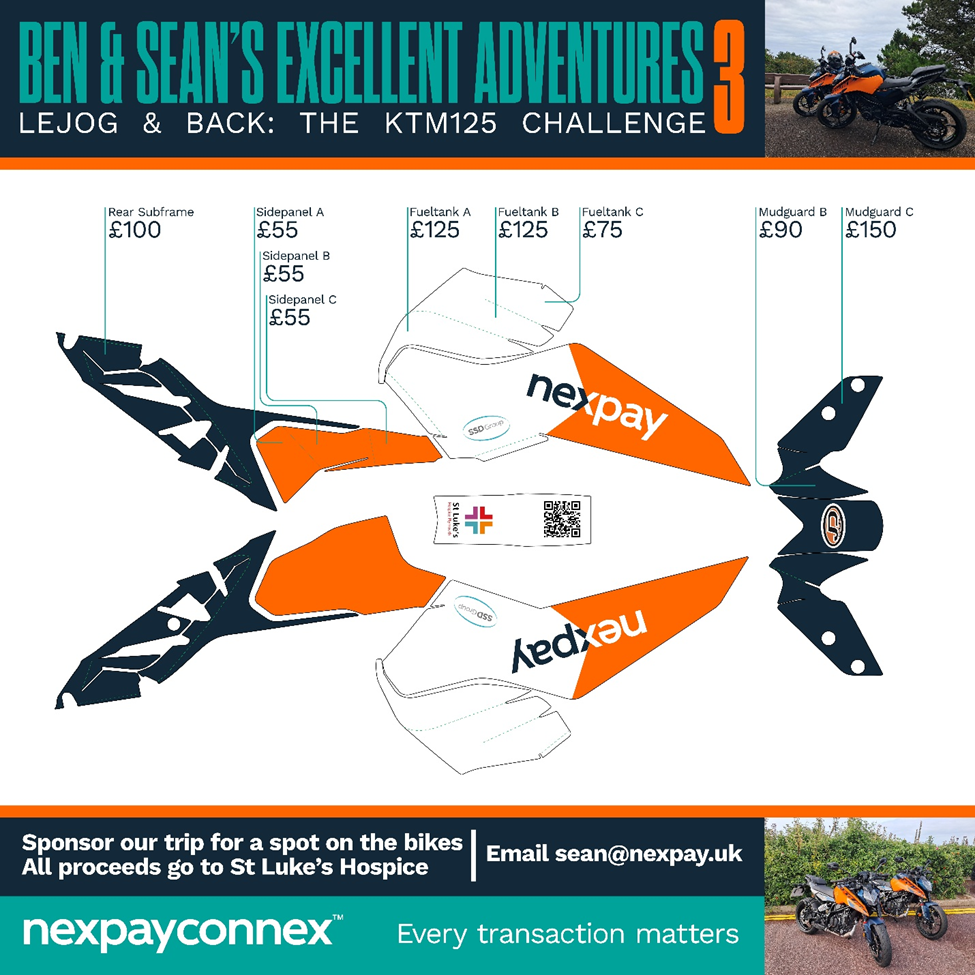
Simple: I want to honour my brother’s memory, in a way he’d approve. This May, my brother-from-another-mother, Ben, and I will ride from Land’s End to John O’Groats in support of St Luke’s Hospice.

We will ride on back roads and cycle routes, astride our shiny new KTM 125 Dukes. That’s a solid challenge for any rider. Add in a decade-plus layoff (on my part), and the choice of a 125cc feels almost poetic. I barely got to know my learner bike before being thrust into the world of near misses.

The Duke of Cornwall

A run out to Widemouth Bay, the long way!

I’ve now clocked nearly 2,000 miles on the little Duke. We’re well enough acquainted for me to share some insights.

Handling

Wow. This bike rides like a big bike. Daisy (as in Daisy Duke) feels planted when you want, flickable when you need. The grin factor genuinely surprised me. I’ve found myself taking 30-mile detours for milk, riding from Gunnislake to Waitrose via Dartmoor, just because. Daisy is pure fun.

There are a few rules to learn when living with a 125cc as your main machine. Ride with intent—keep the revs high, don’t lean too far into those sweeping bends if you want to keep moving. These are the things a fresh minded 17-year-old adapts to in a flash. At 40 years north of that, I’ve had to unlearn as much as I’m learning.

But here’s the thing: I can’t help but think I’ll be a better rider when I eventually trade up after our challenge.

Equipment

The Dukes’ “big bike” ride is made possible by an impressive array of standard kit. WP rear monoshock, anyone? Add standard ABS brakes and you start to see why the Duke inspires confidence. I’ve never once felt like she’d lose traction or fail to stop, even when riding her to the edge in all conditions. She’s built to be ridden right up to her 15BHP and 65MPH limits.

Another big plus: proper Michelin rubber. The tyres are spot on. They grip well and are sure-footed, and excellent in the wet. No nasty surprises here.

Performance

OK, she’s not fast. You have to keep the revs high to make progress. Overtaking punch is non-existent, so you’re best off tucking in and enjoying the slipstream. But the lack of brute power is no problem. From the first press of the starter, the fun-factor is initiated. Know what this bike is—and what it isn’t—and you’ll never be disappointed.

New to Bikes?

You’ll learn a lot from the Duke. She’ll set you up perfectly for your first “proper” machine.

Got Other Bikes?

The Duke deserves a spot in your multi-bike garage.

Returning to Motorcycling?

Fall in love all over again—and pick up a few new tricks along the way.

My average speed over nearly 2,000 miles? 28MPH. Just six miles an hour faster, on average, than Ben and my last cycle ride to the Alps. That’s Duke’s magic: devouring roads with a grin, but without the constant whiff of danger you get from bigger machines.

Do you really need more than 400cc on the road? I’m starting to think not.

Touring

Hahahahahaha…

Well, we’re about to find out!

I’ve done a few three-hour rides and one five-hour stint on Daisy. The latter was tough, but I loved every bend and camber. Three hours is often not quite long enough.

We’ll be fine, I’m sure. Ben and I will split each day into two sections—about two hours of riding apiece—to cover the 3,200-mile challenge in a month. We leave in May. You can follow our adventures here. As for Daisy Duke—well, I think I’m falling in love…again.

Want to sponsor one of the bikes? Get in touch!

Getting Small Again: A 67-Year-Old’s Love Letter to a 125

I’m 67, I’ve been riding bikes since before some of today’s influencers were a
twinkle in their algorithm, and I own three “proper” motorcycles: an Indian Scout,
a 26-year-old Triumph Bonneville, and a BMW F750 GS.

And yet, the key I will be often reaching out for belongs to a KTM Duke 125cc.

On paper, that makes no sense. The Scout has lazy, glorious torque and presence.
The Bonnie has soul, oil stains and a history with my name scribbled all over it. The
BMW will eat miles all day, two-up, with luggage and a self-satisfied whirr from its
electronics.

The KTM? Fifteen horsepower, a thimble of an engine, and technically aimed at
people who still live with their parents and revise for theory tests.

So why does an old bloke like me care so much about a 125?

Power, Weight and the Humbling of the Ego

When you’ve spent decades with “big bikes”, power becomes part of your identity.
You get used to the roll-on overtake, the lazy fifth-gear pull up a hill, the sense that
you could go far faster than you should.

The 125 throws all of that into the bin.

On a Duke (or any decent 125), power isn’t a background hum, it’s a finite resource
you manage. Every overtake becomes a conscious, planned act: “What’s the gap?
What’s the gradient? What’s the wind doing?” It’s less Top Gear fantasy, more
applied physics.

But then there’s the weight.

The Scout and the BMW are wonderful until they’re not – which is usually at
walking pace, on a cambered petrol station forecourt, or performing that awkward
three-point turn you didn’t plan for. At 67, you feel all of that in your lower back
and your confidence.

The KTM, by contrast, is like going back to your first bicycle after years of driving a
van. You can push it around with one hand. U-turn on a narrow lane? Easy. Feet up
almost the whole time. Gravel in a car park? Mildly annoying rather than cardiacevent territory.

Light weight doesn’t just change how a bike rides; it changes how you feel about
riding. It puts a chunk of confidence back in the bank.

Speed, Roads and Learning to Choose Your Battles

A 125 will sit at 55–60 mph happily, maybe more if the wind gods approve, but
that’s about it. You very quickly stop thinking in terms of “How fast can I get
there?” and start thinking “What’s the nicest way to get there, at 55 mph?”

That simple shift changes everything.

On the Scout or the BMW, there’s always a little temptation to stretch the throttle on
A-roads, to use the power that’s there. On the KTM, dual carriageways and
motorways are something you use sparingly or avoid altogether. You become a
connoisseur of B-roads and lanes, of back-way routes the satnav thinks are a
mistake.

At 67, that actually suits me. The joy now is in the journey: the hedge-lined lanes,
the surprise café, the sea suddenly appearing at the end of a road you didn’t know.
A 125 forces you off the big, angry roads and into the little human ones.

Is it slower? Yes.

Does it matter? Less and less, the older I get.

Not a Learner, But Still Learning

KTM didn’t design this bike with someone like me in mind. The marketing shots
are all sharp-jawed youth in skinny jeans and trainers, not a bloke with reading
glasses and a favourite armchair.

But that’s the quiet magic of a small bike: it doesn’t care how old you are.

As a non-learner, the 125 isn’t a stepping stone, it’s a deliberate choice. That makes
you ride it differently. You’re not dreaming of “moving up”; you’re asking, “What
can this little thing teach me?”

It teaches smoothness. Momentum. Planning. Patience.

It punishes lazy gear selection and rewards flow.

In a strange way, it reconnects you with why you started riding in the first place:
not to dominate the road, but to be on it – feeling every bend, every camber, every
gust of wind.

Bigger Than It Looks (And Better Than You Think)

The other lovely thing about the KTM is that it looks bigger than it is. To most nonbikers, it just looks like “a motorbike”. You don’t feel like you’ve turned up on your grandson’s scooter. You can still park it outside a café with a straight face.

For me, this 125 isn’t a downgrade. It’s a recalibration.

I still love the Scout for summer evenings, the Bonnie for nostalgia and tinkering,
the BMW for long, purposeful journeys. But the KTM has become my everyday
companion – the bike that makes a trip to the shops feel like a tiny adventure and a
150-mile day feel achievable, not exhausting.

At 67, with a heart that’s had negotiations with the cardiologists, that matters. The
light weight, the modest speed, the playful feel – all of it helps keep me riding, not
just remembering when I used to.

In the end, the 125 isn’t about age, or status, or cylinder count.

It’s about this simple, stubborn truth:

If a small, nippy, slightly ridiculous-looking bike keeps you out on the road,
grinning under your helmet, then it’s big enough.